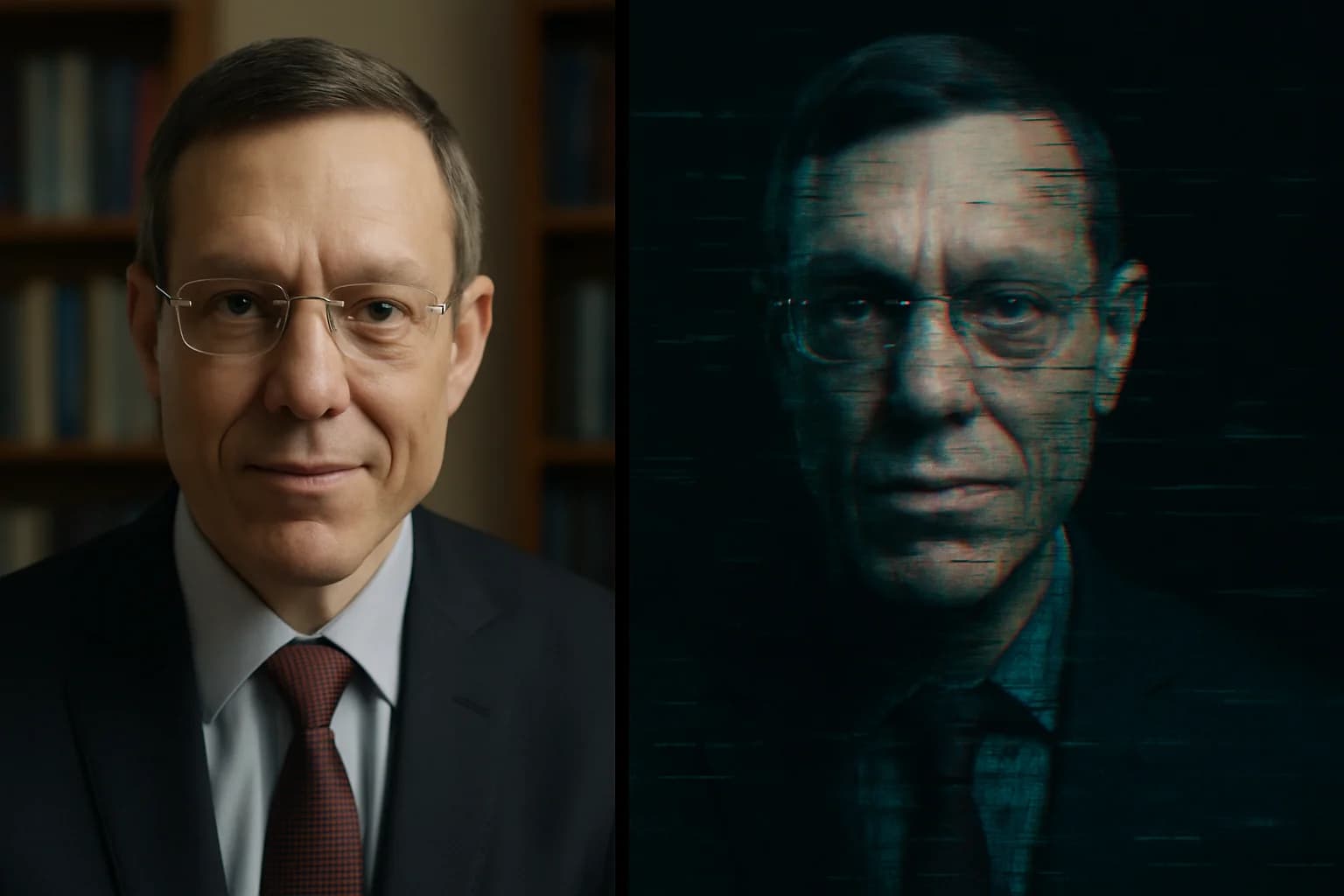
When Science Meets Digital Deception
A disturbing new trend is emerging at the intersection of artificial intelligence and scientific communication: deepfake technology is being weaponized to fabricate statements from prominent scientists about astronomical discoveries. AI voice cloning and face-swapping algorithms can now create convincing videos of researchers making claims they never actually made, spreading false narratives about everything from interstellar objects to alien spacecraft confirmations.
This digital deception works by training neural networks on existing footage and audio recordings of scientists, then generating synthetic content that appears authentic. The technology has become so sophisticated that casual viewers often cannot distinguish between genuine statements and AI-generated fabrications.
The result is a dangerous erosion of scientific discourse, where legitimate research gets overshadowed by sensationalized fake claims that spread rapidly across social media platforms.
The Avi Loeb Deepfake Phenomenon
Harvard astrophysicist Avi Loeb has become a prime target for this type of misinformation. Known for his research on interstellar objects like 'Oumuamua, Loeb's actual scientific approach involves careful consideration of both natural and artificial hypotheses when studying anomalous space phenomena.
However, deepfake videos have been circulating that falsely show Loeb making definitive claims about confirmed alien spacecraft. These fabricated statements go far beyond his actual published research, portraying him as having found conclusive evidence of extraterrestrial technology.
Reality Check: Loeb himself responded to Futurism.com to clarify that these videos misrepresent his actual positions. YouTube has since removed several of these fraudulent videos following reports, but new ones continue to appear.
The real Loeb maintains a nuanced scientific stance, exploring technological possibilities while acknowledging natural explanations for unusual objects. His methodology involves using anomalous observations as thought experiments to develop better detection protocols for genuine discoveries.
What Scientists Actually Say vs. Digital Fiction
When examining official sources, the contrast between reality and AI-generated fiction becomes stark. Major space agencies and astronomical institutions provide clear, documented positions on objects like Comet ATLAS and other interstellar visitors:
- European Space Agency (ESA): Classifications based on orbital mechanics and spectroscopic analysis
- NASA: Comprehensive tracking data showing natural comet characteristics
- Minor Planet Center: Official designations treating these objects as natural phenomena
- JAXA and Brazilian National Observatory: Supporting observations confirming comet-like behavior
Key Points
- All major astronomical institutions classify controversial objects as natural comets
- Loeb's actual Medium blog posts discuss natural possibilities alongside speculative scenarios
- Official databases contain no confirmations of artificial spacecraft
- Scientific consensus emerges from peer-reviewed analysis, not sensationalized claims
Loeb's genuine writings reveal a careful scientist who uses anomalous objects as case studies for developing detection methods. He explores "what if" scenarios to improve our ability to identify genuinely artificial objects should they ever appear.
Debunking False Official Claims
Perhaps most damaging are fabricated claims that space agencies have secretly confirmed non-natural origins for various objects. These false narratives often include:
- Alleged NASA statements about confirmed alien technology
- Fabricated ESA reports on artificial materials
- Fake quotes from observatory directors claiming cover-ups
Documentation from these organizations tells a different story. Official databases consistently classify disputed objects using standard astronomical nomenclature for comets and asteroids. Press releases focus on legitimate scientific discoveries about composition, origin trajectories, and orbital mechanics.
Verification Tip: Genuine announcements from space agencies appear on their official websites with proper attribution, peer-review citations, and technical details. Sensational claims lacking these elements should trigger skepticism.
The absence of credible institutional sources supporting spacecraft theories stands in stark contrast to the abundance of official documentation treating these objects as natural phenomena worthy of study for their unusual but explainable characteristics.
The Cost of Misinformation
AI-generated scientific misinformation creates cascading problems that extend far beyond individual false claims. When deepfake videos spread faster than corrections, public understanding of legitimate research becomes distorted. People may dismiss genuine scientific discoveries as hoaxes, or conversely, develop unrealistic expectations about confirmed alien contact.
This erosion of trust particularly harms fields like astronomy and astrobiology, where researchers must communicate uncertainty and nuanced findings to general audiences. When AI fabrications present oversimplified "confirmations," real scientists appear evasive by comparison when they acknowledge limitations and unknowns in their work.
The phenomenon also creates additional work for researchers who must now monitor for and debunk false statements attributed to them, diverting time and energy from actual scientific investigation.
Building Defense Against Digital Deception
Fighting AI-generated misinformation requires developing new forms of media literacy adapted to the digital age. Key strategies include:
Source Verification: Always check official institutional websites, peer-reviewed publications, and established scientific databases before accepting extraordinary claims.
Technical Scrutiny: Look for proper methodology descriptions, data citations, and acknowledgment of limitations that characterize genuine scientific communication.
Cross-Reference Claims: Compare statements across multiple reputable sources. Genuine discoveries generate coverage across legitimate scientific publications.
Question Sensationalism: Be especially skeptical of definitive claims about controversial topics that lack supporting documentation from established institutions.
The responsibility extends beyond individual vigilance to platforms, educators, and media organizations who must develop systems for identifying and countering AI-generated scientific misinformation before it undermines public understanding of legitimate research.
As deepfake technology continues advancing, protecting scientific discourse requires constant vigilance and improved tools for distinguishing authentic communication from digital fabrication.
Take Action: Verify Before You Share
The fight against AI-generated scientific misinformation requires active participation from everyone who consumes and shares science content. Before sharing astronomical discoveries or statements from prominent researchers, take these essential steps:
Verify the source by checking official websites of space agencies and research institutions. Cross-reference claims across multiple reputable scientific publications. Look for peer-reviewed citations that support extraordinary assertions. Be skeptical of sensational headlines that promise definitive answers to complex questions.
Most importantly, when you encounter suspected deepfake content or false scientific claims, report them to the platforms hosting the material. YouTube, Facebook, and other social media sites rely on user reports to identify and remove fraudulent content.
By maintaining healthy skepticism and demanding proper evidence, we can protect legitimate scientific discourse from being hijacked by AI-generated misinformation. The future of public science communication depends on our collective commitment to truth over sensationalism.
